

EN
EN
Jul 31, 2026
Share:
model solutions injection molding is a precision manufacturing method used to produce complex plastic parts with tight tolerances, stable dimensions, and repeatable quality at scale. In practical business terms, it helps companies reduce part variation, improve assembly fit, and lower scrap rates, which is critical for industries that depend on accuracy, such as medical devices, electronics, automotive, and industrial equipment. For companies working with Yongfeng, this process supports high-precision production by combining disciplined tooling, process control, and quality verification to deliver consistent results.
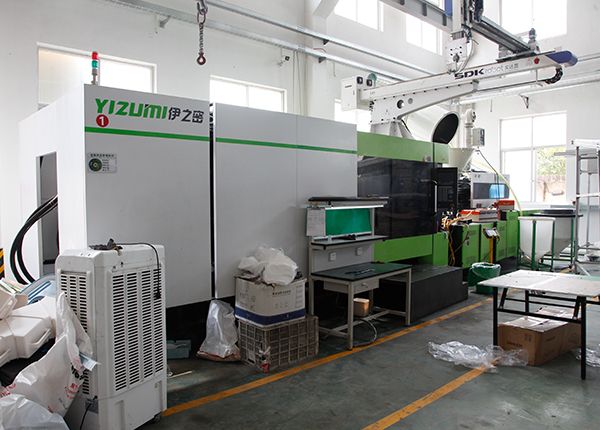
When a component must fit into a larger assembly without rework, even small dimensional shifts can become expensive. That is why model solutions injection molding has become a core process for manufacturers that need precision to 0.01 mm, stable cycle consistency, and reliable repeatability across high-volume runs.
Unlike general-purpose molding, model solutions injection molding focuses on controlled melt flow, cavity balance, tooling accuracy, and process validation. This gives manufacturers a practical way to meet strict specifications while keeping production efficient.
In business terms, the value is clear:
For brands evaluating What Makes Model Solutions Injection Molding Essential for High-Precision Manufacturing Applications, the answer lies in the ability to turn engineering intent into production-ready parts with measurable consistency.
The growth of model solutions injection molding is closely tied to the evolution of modern manufacturing. As industries shifted toward miniaturization, lightweight design, and tighter regulatory expectations, conventional molding methods were no longer enough.
Early injection molding was mainly used for simple consumer goods. Over time, however, sectors like aerospace, medical, and electronics demanded:
This pushed manufacturers to adopt advanced tooling, statistical process control, and validated testing standards. Today, model solutions injection molding is not just about making plastic parts; it is about creating engineered components that support mission-critical applications.
For suppliers like Yongfeng, this means combining mold design expertise with process discipline to meet demanding production requirements.
To understand What Makes Model Solutions Injection Molding Essential for High-Precision Manufacturing Applications, it helps to look at the production chain itself. Precision is not achieved by one step alone. It comes from the full workflow.
The mold is the foundation of the final part. High-precision tooling requires:
If the tooling is inaccurate, no downstream process can fully recover the part quality. That is why professional model solutions injection molding begins with mold design validation.
Different resins behave differently under heat, pressure, and shear. Engineers must account for viscosity, crystallization, glass fiber orientation, and shrinkage behavior. In model solutions injection molding, material selection is matched to the application, whether the requirement is heat resistance, chemical resistance, or dimensional stability.
Common technical controls include:
Reliable production requires verification, not assumptions. Many precision manufacturers use:
For example, tensile and impact properties may be evaluated under ASTM standards, while dimensional conformity or material consistency may be checked according to relevant DIN methods. This approach builds trust and supports compliance.
The real strength of model solutions injection molding is seen in industries where part failure is not acceptable. The process delivers value in applications where precision affects performance, safety, and cost.
Medical components often require clean geometry, stable tolerances, and reproducible quality. Model solutions injection molding is used for housings, diagnostic parts, connectors, and instrument components where dimensional drift could impact device function.
Miniaturized connectors, enclosures, and insulation components benefit from high-precision molding because assembly clearances are extremely small. In this field, model solutions injection molding supports electrical insulation consistency and high-volume output.
Automotive interior components, sensor housings, and functional brackets require repeatable dimensions and robust mechanical performance. Here, model solutions injection molding helps reduce assembly variation and improves line efficiency.
Even consumer products now rely on precision molding for clean fit lines, snap-fits, and cosmetic appearance. That is why model solutions injection molding is increasingly viewed as a manufacturing advantage rather than just a production method.
Many buyers misunderstand what precision molding really delivers. These misconceptions can lead to cost overruns, delays, or quality problems.
This is not true. Precision depends on mold accuracy, process stability, and material behavior. A standard tool may work for general parts, but model solutions injection molding requires tighter engineering and more stringent verification.
Low pricing often hides risks such as poor cavity alignment, inconsistent resin control, or weak quality inspection. In high-precision manufacturing, rework and downtime usually cost more than proper upfront engineering.
Inspection is important, but it cannot fix unstable tooling or poor process control. Strong model solutions injection molding programs combine preventive engineering with measurement systems and documented control plans.
Tolerance is critical, but it is not the whole story. Surface finish, warpage, gate vestige, sink marks, and material properties can all affect real-world performance. A truly effective model solutions injection molding solution addresses the entire part function.
A dependable precision molding program should be easy to audit and easy to trust. Companies like Yongfeng strengthen credibility by pairing manufacturing capability with documented testing and response systems.
Typical quality indicators may include:
These data points matter because they show whether a supplier can actually support What Makes Model Solutions Injection Molding Essential for High-Precision Manufacturing Applications in production, not just in samples.
A medical device company needed a housing that had to align with internal modules without manual adjustment. Using model solutions injection molding, the supplier controlled shrinkage and tool stability, achieving consistent fit across the batch. The result was lower assembly rework and fewer rejected units.
An electronics manufacturer required thousands of small connectors with stable contact alignment. Through model solutions injection molding, the process maintained dimensional consistency and reduced variation in terminal positioning. This improved assembly speed and reduced downstream defects.
An industrial customer needed a reinforced plastic bracket with reliable mechanical performance. The project used validated resin selection and ASTM-based mechanical testing to verify strength and dimensional stability. The outcome was a part that met both function and production targets.
These examples show that model solutions injection molding is not just about creating parts. It is about solving production problems with engineering discipline.
For buyers searching for dependable precision production, Yongfeng offers a practical manufacturing pathway built around engineering control, inspection systems, and responsive support.
Key advantages include:
When evaluating What Makes Model Solutions Injection Molding Essential for High-Precision Manufacturing Applications, manufacturers should look for partners that can demonstrate not only equipment capability but also quality consistency and documentation.
Model solutions injection molding is essential because it transforms demanding designs into repeatable, production-ready components with controlled precision, stable performance, and measurable quality. It helps businesses reduce risk, improve fit, and maintain consistency across large-scale manufacturing.
If your application requires precision to 0.01 mm, validated inspection, and standards-based quality control, then model solutions injection molding is one of the most reliable options available. For companies such as Yongfeng, the value lies in combining technical expertise with dependable execution.
To move forward, manufacturers should assess tooling capability, material control, inspection standards, and response speed before selecting a supplier. In high-precision production, those details determine whether a project simply runs—or succeeds.

Self-owned factory and full progress team, it can help reduce customer cost.

6 designers skilled in part design & tool design

4 tool teams to achieve less production lead-time
One-Stop Service | Mold Design, Injection Molding, Assembly Integration
Customize and design a complete production system solution for automotive plastic injection molding parts processing to meet your production needs
Our Locatlon
ADD :Zhejiang Province, Linhai City, Yanjiang shangjin valley. China, zip:317022
Qulck Contact
Phone: 13606828221
E-mail:Jay@yongfengchina.com

0086-576-85725725
Request A Quote
We have our own testing lab and the most advanced and complete inspection equipment, which can ensure the quality of the products.


