

EN
EN
Jul 31, 2026
Share:
In modern manufacturing, model solutions injection molding has become a key process for companies that need stable quality, repeatable output, and lower unit cost. If you are searching for model solutions injection molding applications, model solutions injection molding benefits, or best industries for model solutions injection molding, this guide will help you understand where it works best and why. The reason is simple: many products need thousands or millions of identical parts, and injection molding can keep dimensions consistent while reducing scrap. In many factories, cycle times can be as short as 15 to 60 seconds per part, which is one reason this process is widely used in high-volume production.
For brands, engineers, and buyers, the real question is not just “what is injection molding,” but “which industries gain the most from it, and how do we choose the right solution?” This article answers that from start to finish.
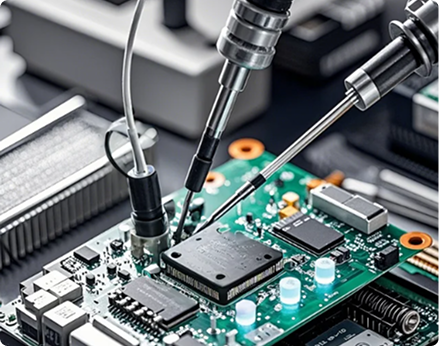
Model solutions injection molding is a manufacturing method that melts plastic pellets, injects the material into a mold cavity, then cools it into the final shape. It is widely used because the process can produce parts with tight tolerances and strong repeatability.
In practical terms, this means a factory can make the same part again and again with low variation. For many applications, dimensional variation can be controlled to around ±0.05 mm to ±0.2 mm, depending on the material, mold, and machine setup.
According to industry guidance from SPI (Plastics Industry Association) and technical resources from MoldMaking Technology, good mold design and process control are the main factors behind stable output. The same idea is supported in engineering references such as ScienceDirect and ASM Handbook discussions on polymer processing: temperature, pressure, cooling rate, and mold finish all affect final quality.
Modern production needs more than just “making parts.” It needs:
A well-set injection molding line can reduce scrap rates, especially when compared with processes that require more manual shaping. In real production, this matters because a scrap rate reduction from 8% to 3% can directly improve profit margin.
It also helps shorten time-to-market. Once the mold is approved, production can move fast. In many cases, a single mold can support output from 10,000 parts per month to over 100,000 parts per month, depending on machine capacity and part size.
This is why model solutions injection molding is not just a technical choice. It is a business decision.
The industries below benefit most because they need high repeatability, high output, and controlled cost.
The automotive sector is one of the biggest users of injection molded parts. Common parts include:
Why it works:
A lighter plastic component can help reduce vehicle weight. In automotive engineering, reducing weight by 10 kg can support better fuel efficiency or battery efficiency, depending on the vehicle type and design. That is one reason automakers keep using injection molding for non-metal parts.
Electronics products often need:
This industry needs parts with clean surfaces, precise dimensions, and stable electrical insulation. Plastics like ABS, PC, PA, and PBT are commonly used because they can balance impact strength, heat resistance, and appearance.
For example, a phone or charger housing must fit tightly and protect internal components. Even small tolerance errors can cause assembly failure. Injection molding helps reduce this risk.
Medical products benefit greatly from controlled molding because safety matters. Common products include:
The medical field often requires clean production environments, traceable materials, and batch consistency. According to industry standards commonly referenced in medical manufacturing, validated processes and material traceability are essential. Injection molding supports these needs because the same mold and process settings can be repeated reliably.
A practical benefit is high consistency. In many medical applications, even a small dimensional change can affect fit or sealing. That is why precision molding is valuable here.
Home appliances use molded parts in:
These products need strong but cost-effective parts. Since home appliance production often runs in large batches, injection molding can reduce per-unit cost significantly. A part that costs more in small production may become far more affordable when output reaches tens of thousands of pieces.
Industrial machines need:
These parts must withstand impact, temperature changes, or chemical exposure. Materials like glass-filled nylon, PP, and PC/ABS are often selected based on the working environment.
The advantage is that one mold can support repeat production with fewer manual steps. For factories that use many identical machine units, this reduces assembly time.
This includes:
Packaging benefits from high-speed molding because volume is high and margins can be tight. In many packaging lines, cycle efficiency matters more than complex design. Injection molding can make thousands of caps with stable dimensions, which helps sealing performance.
While some aerospace parts require metal or composite structures, many non-critical interior or support parts can be molded. These include:
The benefit is weight reduction and consistent geometry. In transportation systems, lighter components can improve system efficiency and simplify assembly.
Below are the most common real-world application patterns.
Automotive buyers often need:
A molded dashboard clip or connector must fit without gap. In mass production, a consistent mold can reduce rework and assembly delays.
Electronics buyers often need:
For example, a charger shell may require a tight fit between upper and lower covers. If the fit is off by even a fraction of a millimeter, assembly fails.
Medical use often requires:
Many companies choose molding because it supports controlled, repeated output.
Appliances benefit from:
A molded part can be designed to combine several functions, which may reduce the need for extra screws or brackets.
Industrial customers often look for:
Injection molding can support all of this when the right resin and mold design are used.
When output increases, mold cost spreads over more parts. This can reduce unit cost sharply. For example, a part that is expensive at 1,000 units may become much cheaper at 100,000 units.
Injection molding can produce a part in as little as 15–60 seconds, depending on size and complexity. That speed is a major advantage for high-volume industries.
Once the process is tuned, the results are repeatable. This is important for industries where assembly failure is costly.
Molding allows:
This means the product can be more functional without adding extra parts.
Compared with subtractive machining, molding can reduce wasted material. Better gate design, runner design, and process control can further reduce scrap.
To help users fully understand the process, here is the full workflow.
Engineers define:
A good design reduces molding problems later.
The mold is designed based on the part structure. This includes:
Poor mold design can lead to warping, sink marks, or short shots.
Common materials include:
Material choice depends on the end use.
The first mold trial checks:
This stage often saves later production cost because problems are corrected early.
After approval, production begins. Parameters such as injection pressure, melt temperature, and cooling time are locked in to keep quality stable.
Parts are checked for:
Good quality control can prevent batch returns.
Molding solves this by making high quantities with low per-unit labor.
Molding reduces variation because machine settings are repeatable.
Once tooling is ready, cycle times are short and output is fast.
A well-designed molded part can combine several functions into one piece.
A mold can create textured, glossy, or matte finishes with clean edges.
Industry reports and engineering references support the value of injection molding:
This is why companies in automotive, electronics, medical, and appliance sectors continue to invest in injection molding.
When choosing a supplier, check these points:
The supplier should understand resin performance, including heat resistance, shrinkage, and strength.
A strong supplier can optimize:
Ask whether they use:
Make sure the supplier can meet your volume target without delay.
A supplier familiar with your industry can predict common defects faster.
If you want to understand whether model solutions injection molding fits your product, the next step is to review product drawings, material needs, and annual quantity goals.
You can also explore a trial project with Yongfeng to evaluate:
A pilot run is often the fastest way to confirm whether the solution fits your market needs.
The biggest beneficiaries are automotive, electronics, medical, home appliances, packaging, and industrial equipment.
It can be used for small runs, but the mold cost may be harder to recover. It is usually most cost-effective for medium to high volume.
Common materials include ABS, PP, PC, PA, and PBT, depending on strength, heat resistance, appearance, and cost needs.
Many parts can be made in 15 to 60 seconds per cycle, depending on size, thickness, and material.
Because mold design affects filling, cooling, part quality, and cycle time. A good mold can reduce defects and improve output.
Yes. If you need custom production support, you can contact Yongfeng to discuss product design, mold development, and trial manufacturing.
Model solutions injection molding has become an important process in modern production because it solves real business problems: cost, speed, consistency, and scale. It is especially valuable in industries that need large quantities of precise parts, such as automotive, electronics, medical, home appliances, and packaging.
If you are planning a new product or want to improve an existing one, the best next step is to review your design, material, and target output, then start a feasibility check. For more detailed guidance or a trial project, consider reading the user guide or contacting Yongfeng for further support.
If you want, I can also turn this into:

Self-owned factory and full progress team, it can help reduce customer cost.

6 designers skilled in part design & tool design

4 tool teams to achieve less production lead-time
One-Stop Service | Mold Design, Injection Molding, Assembly Integration
Customize and design a complete production system solution for automotive plastic injection molding parts processing to meet your production needs
Our Locatlon
ADD :Zhejiang Province, Linhai City, Yanjiang shangjin valley. China, zip:317022
Qulck Contact
Phone: 13606828221
E-mail:Jay@yongfengchina.com

0086-576-85725725
Request A Quote
We have our own testing lab and the most advanced and complete inspection equipment, which can ensure the quality of the products.


